
Three Tools for Creative Research
These are off the beaten "writer path," so they're Misfit-perfect . . .
If anything you write (fiction or nonfiction) requires specific facts, descriptive background, historical context, colorful details, or any other kinds of information, I think you’ll find the following resources to be interesting at least — and maybe indispensable.
I discovered these go-to sites while writing on assignment for several online reference publications. And now that I’m also working on stories for a more general audience, this trio of resources is turning out to be just as useful.
#1 The Internet Archive
There are three parts to the Internet Archive:
The Wayback Machine
Books to Borrow
Open Library
You may be familiar with the Wayback Machine, but if not, here’s the gist:
For the past 23 years the Wayback Machine has archived more than 900 billion URLs, and more than 400 billion Web pages, and adds many hundred million more archived URLs each day. As such there is a good chance archived versions of “missing” pages you are looking for are available.
You do have to know exactly what you’re looking for, though. It doesn’t work to just search for words or phrases that appeared somewhere, sometime. But if you have a URL and a date range, you’ll have a good chance of retrieving what you need.
On the other hand, if you are looking for something that was once (or still is) in print, you can search by keyword to find a selection of scanned texts in Books to Borrow — and in some cases, you can “check them out” for fourteen days to read inside the Internet Archive site.
I’ve found books there ranging from quite old to pretty new, and from ordinary to obscure, on a wide variety of subjects. And best of all, they are searchable! Once you’ve checked out a book, enter any word or phrase in the search box and Books to Borrow will show you every page where it occurs.
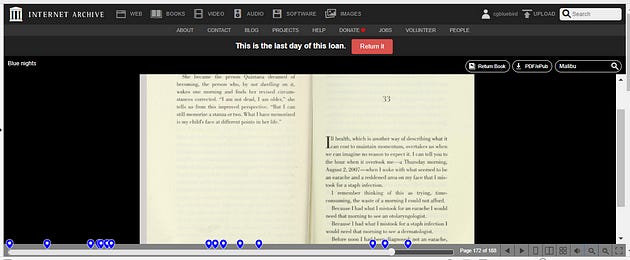
Unlike Google Books (and Amazon’s Look Inside feature), every book on Books to Borrow is complete, and includes illustrations if there are any. You are looking at pictures of the actual book — page by page, and cover to cover.
In addition to print books, Books to Borrow includes other print items (magazines, newspapers, ephemera) along with audio books, music, and even games.
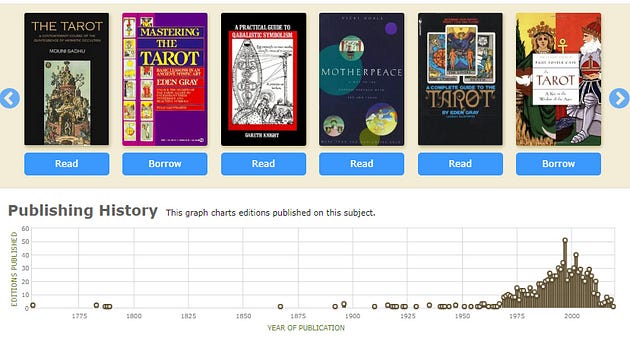
Open Library is similar, but differs in terms of the types of books available, and the search navigation. It’s easy to search by topic — and topic results give you extra insights. Here’s a sample:
Beyond just doing research — if you don’t have enough room or money for all the books you’d like to read (or at least look at), Books to Borrow and Open Library are great resources. Sometimes there is a waiting queue to borrow a particular title, but they will notify you when it’s available.
#2 The Quote Investigator
Now that so much information gets passed around online, once a wrong attribution gets started, it’s likely to spread far and wide. So whenever you use a quotation in your writing, check this site before you assume you have the correct information about who said it, and where/when.
The generous scholar(s) behind The Quote Investigator have gone to very great lengths to track down many famous and not-so-famous quotes — more than 1,300 so far. They receive hundreds of requests and maintain thousands of open files as they continue to trace the origins of various quotations.
You can search by keyword or by the names of famous people. And most entries contain a lot of related information, along with notes and citations.
This search I performed recently revealed that the same quote has been attributed to at least six people, in five different versions!
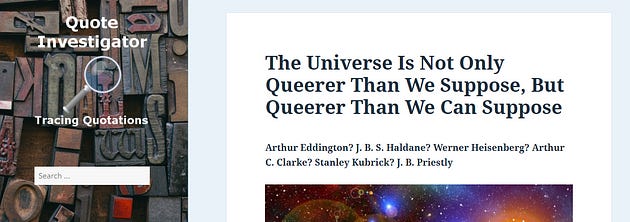
That search provides a good illustration of why it no longer works just to check two or three sources. Even if they all give the same information it may be wrong — and you will often find several versions of the same quote, as well as several different attributions or alleged sources.
If the quote you want to use comes from a poem or novel, it probably won’t be on Quote Investigator. So here’s another good use for Books to Borrow and Open Library. You may be able to check out the book and validate the quotation. Because the texts you get here are scanned versions of the book, you can see what’s around the quoted material, check the copyright, and gather other accurate information about the source.
#3 JSTOR
Although much of the content on JSTOR comes from academic journals, there is a surprising amount of useful lore to be found. In addition to journals you’d see in a university library, there are also some you’d find in a public library or a high school resource center. And there are some journals so obscure that you’d never find them anywhere if you didn’t stumble across them in JSTOR!
You can search on any word, narrow your search with subsequent search words, filter the results, and see a preview of the first page for any article that interests you. Many of the articles are free to read online once you register — and you can read up to 100 articles a month.
You can also create your own workspace to save and organize article links.
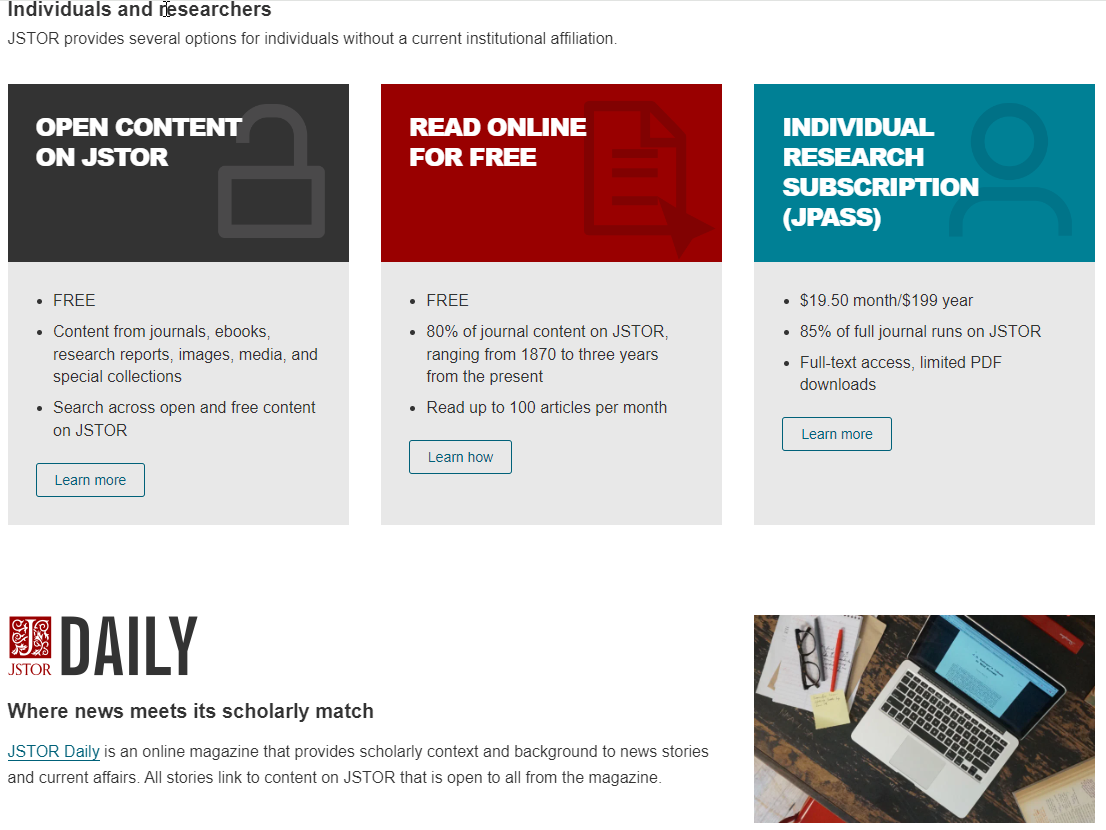
JSTOR even has its own newsletter.
Even if you aren’t necessarily looking for scholarship, J-STOR is a great source for getting ideas about a topic. You just never know what you’ll find there, and you can poke around endlessly with no strings attached!